About Us
The history of our College
The history of the Western Australian College of Agriculture – Morawa began in 1978, when the first residential students came to Morawa to pursue specialist agricultural education. The students lived in accommodation originally occupied by single men working at the nearby iron ore mine. During the day, they combined study with practical work on the College’s 200-hectare farm, much of which is now home to the College’s buildings and facilities.
In 1984, the Department of Education established the farm as an Agricultural Wing of the local District High School. Following the purchase of two additional properties, the College’s farming area expanded to 2,838 hectares. In 2001, the neighbouring 400-hectare property, “Granville’s”, was acquired, bringing the total farming area to 3,242 hectares.
A new Residential Campus was completed in 1992, and in 1995 the College became independent from the District High School. On 1 January 2001, Morawa joined four other Agricultural Colleges to form the Western Australian College of Agriculture. In 2011, two new 16-bedroom dormitories and a six-bed medical centre were completed, increasing the College’s residential capacity to 72 students.
Morawa was first registered as a Registered Training Organisation in November 1999. This enables the College to deliver nationally recognised qualifications in Agriculture, Engineering, Automotive, Horse Care, Aquaculture and Rural Operations continuing its long-standing commitment to practical, industry-focused education.
Our College
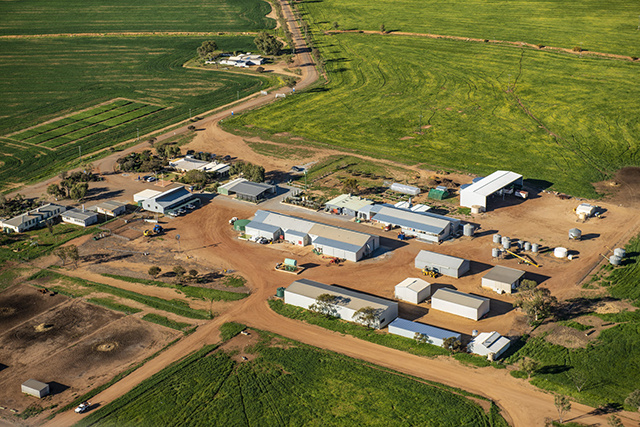
The Western Australian College of Agriculture (WACOA) Morawa is located 360 kilometres north of Perth, adjacent to the town of Morawa. The College operates on a 3,242-hectare working farm that focuses primarily on broadacre cropping, supported by a range of agricultural enterprises including a Gelbvieh cattle stud, Merino and crossbred sheep, and a commercial piggery.
The College provides a hands-on approach to education, combining traditional classroom learning with practical training in farm operations, automotive technology, engineering, and plant and animal science. Classroom subjects are delivered with a strong agricultural focus, ensuring students can apply theoretical knowledge in real-world settings.
Students spend one day each week working on the farm, gaining valuable experience across all aspects of agricultural production and farm management. Additional practical learning takes place in the Automotive and Engineering workshops, with the remainder of the week dedicated to classroom studies. While agriculture forms the foundation of the curriculum, the skills and knowledge gained provide pathways to a wide range of careers, apprenticeships, traineeships, university studies, and TAFE courses.
The College maintains strong partnerships with the Department of Primary Industries and Regional Development (Agriculture WA) and the Mingenew Irwin Group (MIG), enabling students to participate in research projects, large-scale cropping trials, and the evaluation of innovative farming technologies and practices.
The modern residential campus accommodates up to 72 male and female students. Each student has a private bedroom and shares bathroom facilities. Dormitories are air-conditioned and include common areas equipped with kitchens and televisions. Dedicated residential staff organise a variety of weekend activities, including camps, picnics, AFL matches, concerts, and day trips, creating a supportive and engaging boarding experience.
Boarding students are encouraged to become active members of the local community. Regular social events and school balls provide opportunities to interact with students from Morawa District High School and build lasting friendships.
Students can also participate in a wide range of sporting activities. Spring and Autumn carnivals are held with other Western Australian Colleges of Agriculture, while local winter sports competitions include football, hockey, and netball. Students are welcome to represent Morawa and compete across the North Midlands region, with transport provided by hostel staff. Sporting events take place in surrounding Mid West Wheatbelt towns including Mingenew, Three Springs, Carnamah, Perenjori, Coorow, and Dongara.
The College offers Schools Curriculum and Standards Authority (SCSA) accredited courses for Years 11 and 12. The Year 10 program, introduced in 2005, incorporates five learning areas aligned with the Western Australian Curriculum Framework.
Students have access to a diverse range of agricultural enterprises, including sheep, pigs, intensive cattle production, and broadacre cropping. The College farm is regularly used for large-scale cropping trials conducted by Agriculture WA, with students actively involved in monitoring and recording results. Additional research projects and technology trials are undertaken in collaboration with industry partners such as the Mingenew Irwin Group (MIG).
College facilities include a modern abattoir, cattle feedlot, piggery, and specialised cattle and sheep handling complexes. Students also benefit from well-equipped educational facilities, including a library, computer network, instructional classrooms, and dedicated Automotive and Engineering workshops.